Preparing yourself and your home for the arrival of a puppy
The arrival of a puppy is an exciting event that requires not only love, but also careful preparation. To ensure that the first days together go smoothly, it is important to take care of the safety of the space in advance, purchase the necessary things, and adjust to the new rhythm of life.
Space arrangement
Wires, cords and extension cords should be removed from the floor, as well as any small objects such as shoes, socks or toys that the puppy could swallow. Particular attention should be paid to indoor plants, as many of them, such as lilies or azaleas, are toxic to dogs, so it is better to remove them from the room or place them in inaccessible places. It is also worth limiting access to household chemicals by moving cleaning products to the upper shelves or installing safety locks on cabinet doors. At the initial stage, until the puppy is toilet-trained, it is advisable to remove carpets to prevent them from being used as diapers.
Checklist of necessary purchases
1. Cage
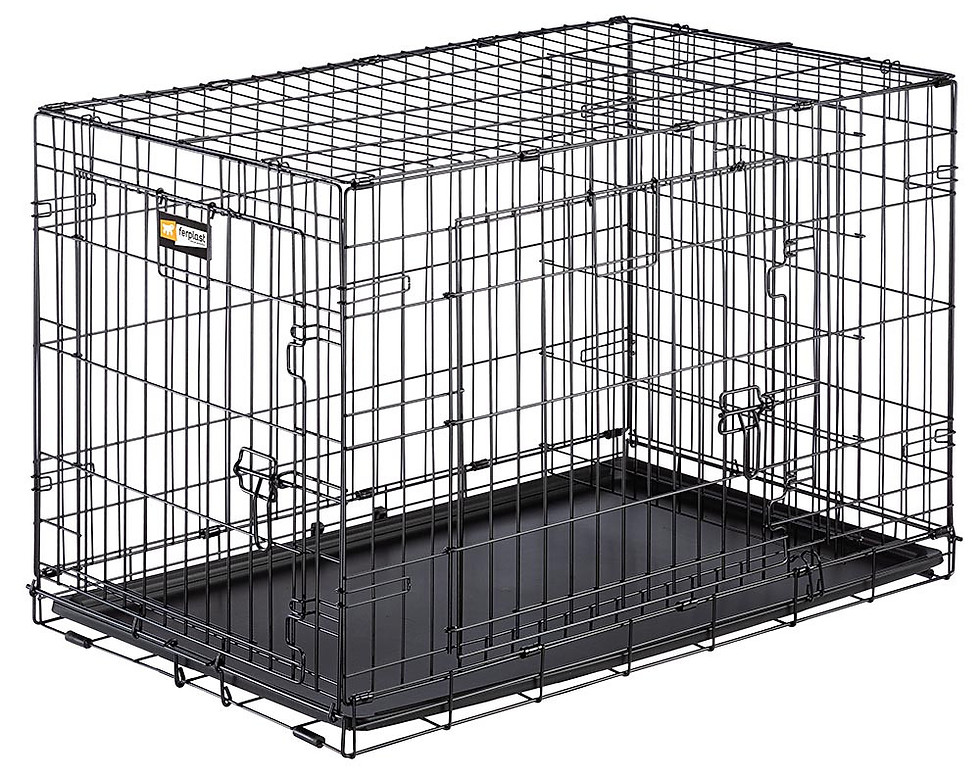
A crate is not a way to restrict freedom, but a cozy place that dogs perceive as their home. It is indispensable for safe transportation in the car and for the puppy to be comfortable when you are not around.
It is very important to properly train your dog to it.
Shiba Inu - Ferplast DOG-INN 75 (77.4 x 48.5 x 54.6 cm)
Australian Shepherd - Ferplast DOG-INN 90 (92.7 x 58.1 x 62.5 cm)
American Akita - Ferplast DOG-INN 105 (108.5 x 72.7 x 76.8 cm)
2. Lounger
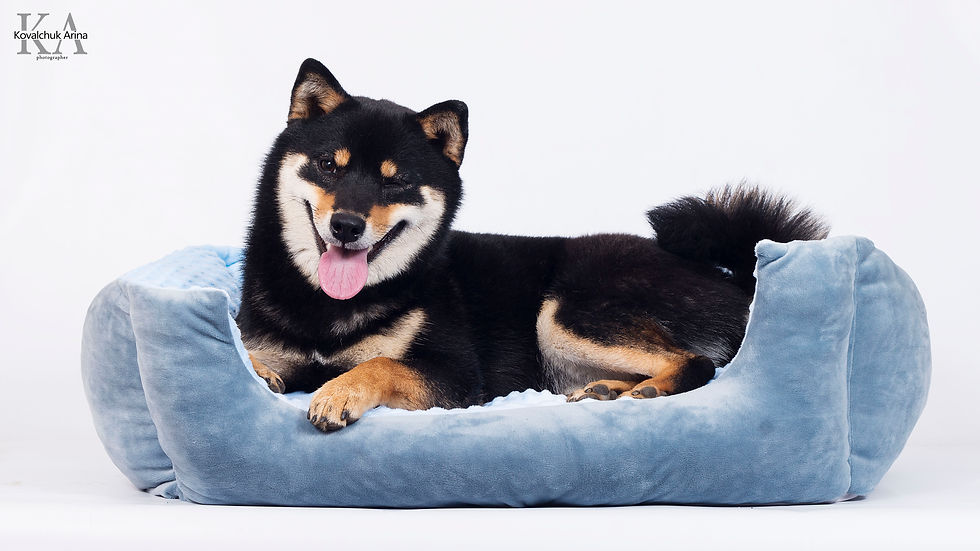
Don't overdo it: Many owners mistakenly buy huge beds, hoping that their dog will be more comfortable. However, puppies (especially breeds like Shiba Inus) are more comfortable in small spaces. A space that is too large can make a puppy feel uncomfortable.
For a window, a size of about 40x50 cm is considered ideal.
3. Hygiene and toys
Diapers - it is convenient to use both disposable ones (size 60x90 cm, which are easy to find in mass markets) and reusable ones, matched to the size of the cage tray.
When choosing toys, avoid products with small parts, such as eyes or noses, which the puppy can chew off and swallow. Soft toys should be without dangerous fillers, and you should be careful with ropes - it is better to give them only under supervision so that the dog does not eat the threads. The safest toys are toys made of dense rubber.


As for nutrition, up to 6 months, you should be careful with treats, choosing natural dried products, such as lungs or liver, which you also need to accustom to gradually.
Dogs are conservative, so the daily routine, walking and feeding schedule should be established immediately after the puppy's arrival. The most important thing is to be patient and calm, because puddles and bites are a natural part of the adaptation process, and not a reason for punishment. Instead, you should master the methods of positive reinforcement, because your goal is to train your puppy and build a strong trusting bond with him from the first days of living together.